
Over the last decade, Marrakech has risen as a vibrant art hub, attracting both established Moroccan artists and international talents alike. With its rich cultural heritage, stunning landscapes, and dynamic atmosphere, the city offers an inspiring backdrop for artistic expression and creativity. One of the key contributors to Marrakech’s emergence as an art destination is the presence of renowned galleries, museums, and cultural institutions that showcase a diverse range of contemporary and traditional artwork. These spaces provide platforms for both local and international artists to exhibit their work, fostering cross-cultural exchange and dialogue.
Moreover, Marrakech has become increasingly recognized for its hosting of prestigious art events and fairs, such as the 1-54 Contemporary African Art Fair. This annual event showcases the work of artists from across the African continent and its diaspora, providing a unique opportunity for collectors, curators, and art enthusiasts to engage with cutting-edge contemporary art. The presence of such high-profile art fairs not only attracts attention to Marrakech as a cultural destination but also stimulates the local art scene, encouraging collaboration and innovation among artists and cultural practitioners. Additionally, these events contribute to the city’s economy and tourism industry, further solidifying its status as a global art hub. On this blog, I will delve into one of our favorite artists in town, the ever-so creative Amine El Gotaibi represented by MCC Gallery.
Amine El Gotaibi, a 2008 graduate of the National Institute of Fine Arts in Tetouan, has emerged as a prominent figure within the Moroccan contemporary art scene. Known for his innovative approach, El Gotaibi integrates various disciplines into his large-scale projects, spanning both space and time. His creative repertoire encompasses traditional mediums such as drawing, video, painting, and installation. However, what sets him apart is his incorporation of mechanical engineering and travel into his artistic endeavors.
By blending these diverse elements, El Gotaibi crafts immersive experiences that transcend conventional boundaries, inviting viewers to explore new realms of perception and interaction. His work reflects a deep appreciation for both traditional art forms and modern technologies, resulting in dynamic and thought-provoking installations that captivate audiences across cultural and geographical divides. Through his multidisciplinary approach, Amine El Gotaibi continues to push the boundaries of contemporary art in Morocco and beyond, leaving an indelible mark on the global artistic landscape.
In Amine El Gotaibi’s Atelier, his artwork transcends mere physical space, delving deep into the realms of history and personal introspection. The venue itself, once a factory now in a state of decay, serves as a poignant backdrop for his creative expression. Through his art, El Gotaibi confronts the vast expanse of the venue with a sense of purpose and determination, breathing new life into its dilapidated surroundings.
One cannot help but feel the weight of history and the passage of time in El Gotaibi’s work. His additions in size, techniques, and forms serve as a testament to his commitment to bridging the gap between past and future, between what once was and what is yet to come. Each stroke of his brush or mechanical innovation serves as a restoration of sorts, not only of the physical space but also of the self.
The Atelier becomes a sanctuary where El Gotaibi grapples with the complexities of existence, where he explores the intricacies of identity and belonging. Through his art, he navigates the interplay between memory and anticipation, weaving a narrative that transcends the confines of the present moment. In doing so, he invites viewers to join him on a journey of self-discovery and renewal, where the echoes of the past converge with the possibilities of the future.
In essence, Amine El Gotaibi’s Atelier is more than just a space for artistic creation; it is a testament to the resilience of the human spirit, a testament to our capacity to confront adversity and transform it into something beautiful. It is within these walls that El Gotaibi finds his voice, forging connections between the tangible and the intangible, between the past and the future, between what was and what could be.
Amine El Gotaibi’s projects showcase a profound engagement with Moroccan culture, history, and ecological concerns, as well as a mastery of merging traditional techniques with contemporary art practices. Two of his most notable projects, “Attorab Al Watani” and “Mountain and Desert,” exemplify his artistic vision and thematic depth.
“Attorab Al Watani” (National Territory) stands as a monumental testament to the symbiotic relationship between human presence and the environment. Presented during COP22 in Marrakech, this collection of artworks utilizes monumental Arabic lettering inscribed on walls built with rammed earth, a traditional Moroccan construction technique known for its ecological sustainability.
Through this installation, El Gotaibi underscores the intrinsic value of protected territories, suggesting that their preservation relies on collective efforts in construction and conservation. By utilizing eco-friendly materials and emphasizing the importance of human stewardship, he highlights the reciprocal relationship between the land and its inhabitants, positing that the territory serves as both a sanctuary and a responsibility for its people.
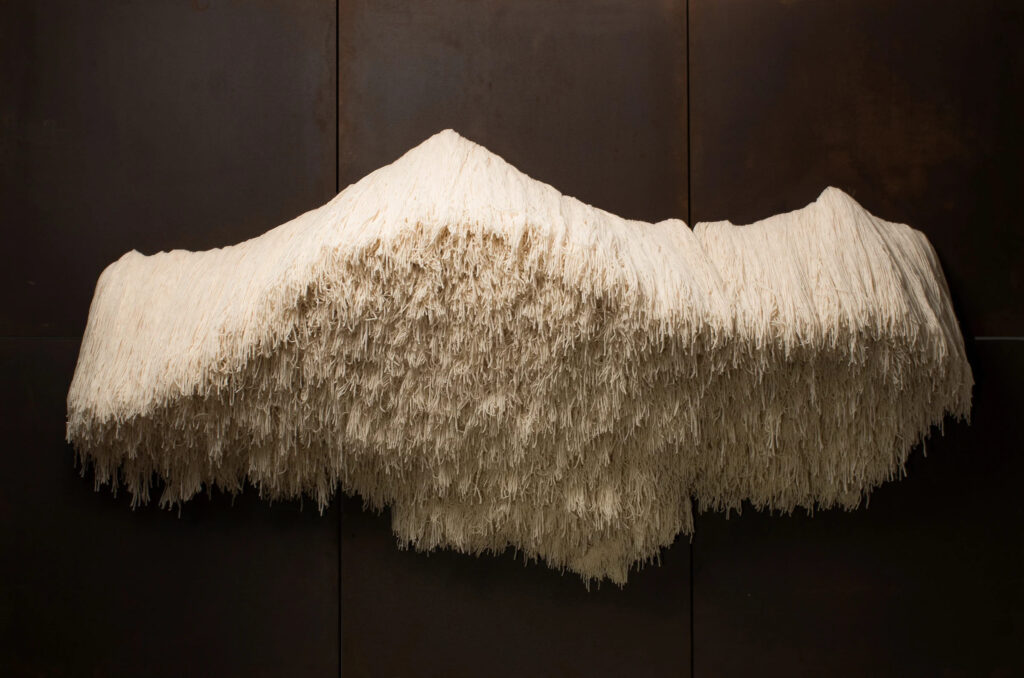
In “Mountain and Desert,” El Gotaibi draws inspiration from historical narratives, particularly from Abdellah Laroui’s “History of the Maghreb,” to explore the enduring significance of mountainous and desert regions as sites of survival and resistance. Through large-format works blending wool and steel, he captures the majestic essence of these landscapes, evoking their formidable presence and historical significance.
Each piece in “Mountain and Desert” reflects a dialogue between emptiness and fullness, verticality and horizontality, mirroring the contrasting yet complementary forces inherent in these natural environments. By imbuing his artworks with such dynamic interplay, El Gotaibi invites viewers to contemplate the enduring power and resilience of these regions, as well as their role in shaping the collective identity and history of the Maghreb peoples.
Overall, our Art and Design Tour offers a dynamic and immersive experience that goes beyond mere observation, inviting participants to actively engage with art as a catalyst for dialogue, reflection, and social change. By facilitating meaningful conversations about timely issues through art, the tour serves as a platform for cultural exchange, education, and inspiration, fostering connections and fostering a deeper appreciation for the transformative power of creativity.